Mark, colour on paperSVG
Brand language
Act is human. AI is the machine.
ActwithAI speaks in two voices at once: an editorial serif for the human part and a pixel face for the machine part. The logo is built the same way: plates of ink, joined by coloured hinges.
The human voiceActInstrument Serif. Warm, editorial, opinionated. Headlines, quotes, names.
The machine voicewithAIJersey 15. Square, exact, a little playful. Numbers, prices, the words that do the work.
01 · Logo
Plates and hinges.
AWA on a 7-row grid of square tiles. Ink tiles are the plates. A coloured tile sits on every joint and end of a stroke: the hinges that let it fold into anything. Move over the mark; click to rebuild it.
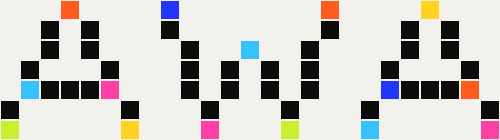
Mark, colour on inkSVG
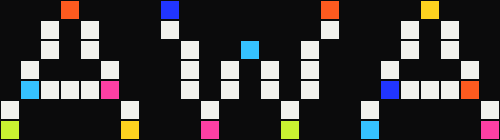
One colour, for print and photosSVG

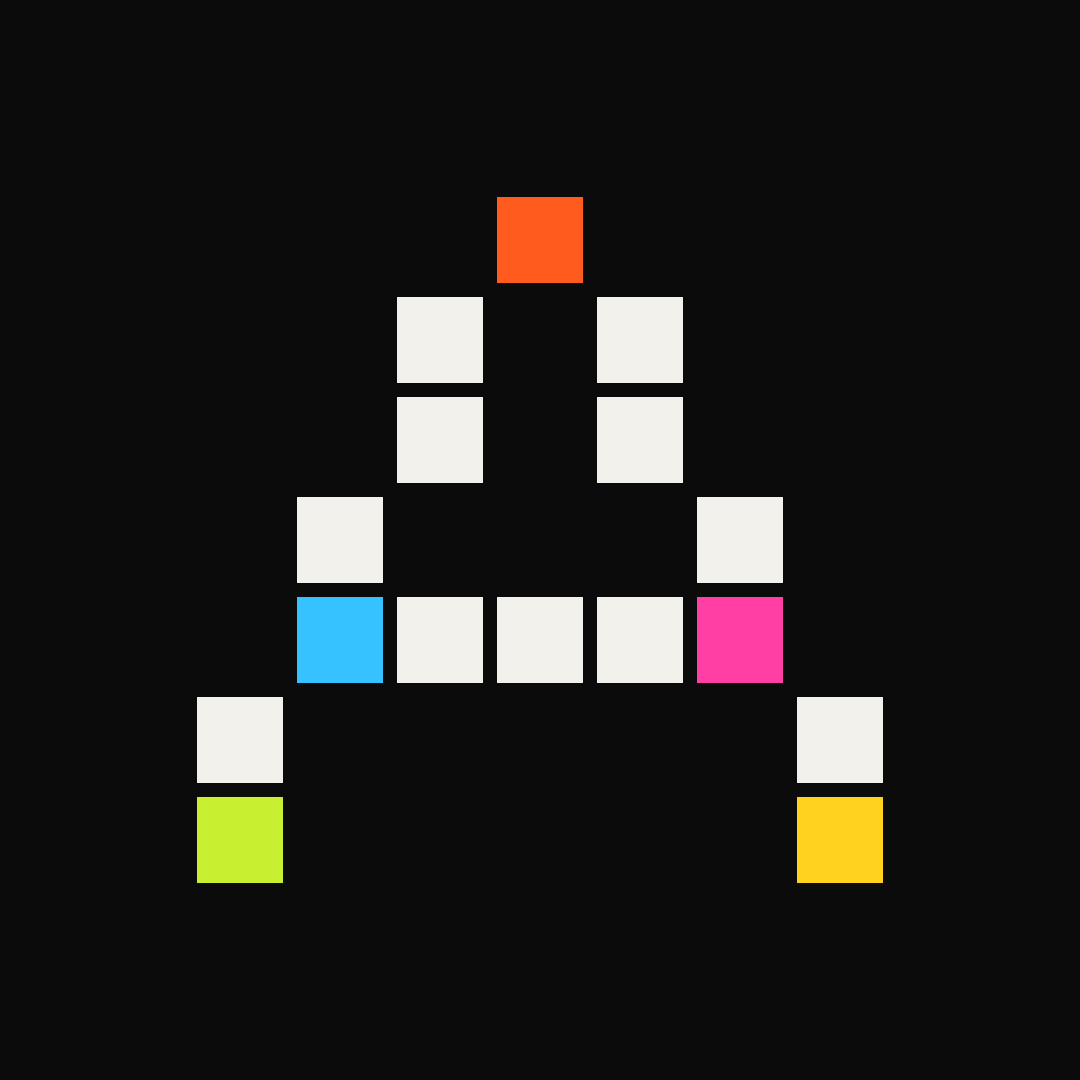
Icon: profile, favicon, appPNG 1080
ActwithAI
Wordmark: one word, two voicesno space
ActwithAI
Lockup: gap of 2 tilesclear space 2 tiles
Smallest sizes: the mark 48 px wide, the icon 16 px. Below that, use the A icon. On busy photos, use the one-colour mark.
Grid: letters are 7 tiles tall; A is 7 wide, W is 9 wide; one empty column between letters. Tile gap: 14% of a tile. The W's middle point sits 2 rows down so it reads as a W.
02 · Colour
Paper, ink, one blue.
Mostly paper and ink. One blue to point at things. Five hinge colours, used only as single pixels or small tags. Click a colour to copy it.
Roughly 45 paper · 35 ink · 15 blue · 5 hinge colours
03 · Type
Five fonts, all free.
All on Google Fonts. Mix the serif and the pixel face inside one headline: the human word in serif, the working word in pixels.
Instrument Serif
Human voiceSay it once.
Jersey 15
Machine voice₹1,35,000 / month
Silkscreen
Labels, buttonsStart your brief →
Geist
Body textSend a voice note on WhatsApp. We research, script, animate, edit and post, every week of the month.
Geist Mono
Data, captions19 reels · 34 min · 52 verse references · 9–16 Nov 2026
04 · Icons
An 11-pixel grid.
One colour, square pixels, no smoothing. New icons are drawn on the same grid. Click an icon to copy its SVG.
05 · Motion
Scatter, hinge, lock.
Pixels arrive from a scatter. Hinges land first, plates fill in from the nearest hinge, then the name types in. The drawings are pixels; the movement is smooth: everything eases out fast and settles slowly. The video is made in our studio from the same code.
5.5 ssting length · 1080 × 1080 and 1080 × 1920 masters in Video Studio
0.9 seach pixel's travel time, easing out
0.16, 1, 0.3, 1the one easing curve (expo out): UI moves 0.25–0.35 s, reveals 0.8–1.1 s